Little Stuff I didn't know how to safely include + other stuff!
What is the difference between spirits and spiritual creatures?
Within Astracel, Spirits are entities that possess phasing and intangible bodies. They are often simply referred to as "Alofnikon" or "Phantoms". While they can be interacted with through guidance, they cannot be physically touched and are not always visible.
Spiritual Creatures, also sometimes referred to as "Ajimon Ravuf" or "Mortal Angels", are entities that have a connection to other realms, but possess mortal, physical bodies. They can be physically interacted with and are always visible to the naked eye.
What gets included within the Codex Tablets and why
While Astracel contains many types of Fauna and Flora, only those that are native to Astracel, or created here, receive a codex entry. This means you can still find ordinary animals such as horses, huskies, or black cats, even though they are not featured in any codex tablet. They have evolved in a similar manner and share nearly identical DNA with their Earth counterparts, with only a few exceptions. One such exception is the Reti-Lompent, a species that originated when a deer and a tiger mated. Over time, this hybrid developed into a distinct species unique to this world. Because of this, although deer and tigers also exist on Astracel, only the Reti-Lompent appears in the Codex, since the original animals can also be found on Earth. Similarly, Fauna and Flora found on other worlds, such as the Kinvivad from Odyra, are not included in the Astracel Codex. According to the lore, the team responsible for documenting the Codexes is composed of multiple Races and was founded by the Inser Foundation. There is only 1 Fauna species that is exempt from these rules, appearing on every world without any variation.
What is the Great Peace Treaty
The Great Peace Treaty is an agreement between the Humans, Hydromancers, Manifourians, Kamuzih, Ignarans, and Titanborns. It was established roughly 100 years before Human arrival and later expanded to include both Humans and Titanborns. The key rules of this treaty are to never seek war with one another and to uphold several shared laws. Additionally, if one nation is attacked by another, all other treaty members must provide aid in that conflict.
The Races that are not part of TGPT each have specific reasons for their absence. Terrans operate a largely underground {pun intended} market of illegal goods that are in violation by the TGPT. Lynxas and Khorul do not take sides and choose to assist whoever they are friendliest with/whoever pays the most. Luphirians live a peaceful lifestyle similar to monks on Earth. Eliors were treated as slaves for a long time and have vouched to never again interact with other Races. Lastly, the Shaoul Varon live a deeply holy life and refrain from interfering unless instructed by their eldest leaders.
As a general note: this is only a broad summary of these Races and does not mean every individual behaves this way. For example, one could say Humans are a violent Race with a long history of racism and sexism, but that does not mean all Humans are like that.
Who and What is the Inser Foundation
The Inser Foundation is composed of many Races, including some not represented within the TGPT. However, the leaders of the Foundation originate from the treaty’s member Races. Each Race appoints five representatives to serve as their spokespeople. These individuals decide on general laws and oversee major affairs. When a new law is proposed, it must first be approved by all Races and then voted on by the public, requiring at least 80% total approval. Even though some Races are not part of the TGPT, they still maintain large-scale operations that move through the TGPT system, such as the Terrans' harbor in Grûat or technological advancements made possible by the Lynxas. It is also important to note that the Black Manta Prison is property of the Inser Foundation.
Dimensions vs Realms
Dimensions are different universes. For example, Humans come from Earth, designated under the dimension ID sol_69101657296, while Ignarans come from Pyrhh, designated under the dimension ID sol_12380548463. Each dimension contains more planets and suns than one could count, and the number of dimensions that exist is theoretically so vast that no number can truly define it.
Realms are specific to each dimension and can also be called sub-dimensions. They are connected only to one dimension and nothing else. Examples of this include the Spiritual Realm on Astracel, as well as places like Heaven and Hell on Earth.
Known Dimensions
Known Dimensions are the dimensions currently recorded within the Codex. While the true number of dimensions is theoretically too vast to define, only a limited amount have been identified, named, or given a known dimension ID. The list below displays their corresponding worlds, including the names they have been given, their dimension ID, and their dominant species.
While I haven’t started creating characters yet, there is a set of rules I have created for myself, including some basic rules, species rules, and a few more joke-like ones. But in case anyone ever wanted to create a character, I might as well post them here :)
Basic Rules
Hair Colors: If working with data, include a natural hair color. The character can have a different hair color than what is naturally possible, but their natural hair color must still be included. For example: Natural: Blonde. Dyed: Green.
Height: Characters can’t be enormously big or incredibly tiny compared to the average height of their species. Exceptions can include things like dwarfism and gigantism, but don’t overdrastically do it.
Shiki Powers: Every character no matter what Eldrane they are, can only hold a maximum of two different Shiki powers at the same time. However this is still a rare occurance, with most characters only suffiecient in one type of Shiki.
Species Rules
Shaoul Varon: All Shaoul Varon look the same. Their only difference is black or white hair, and nothing else is different. They only have one gender and do not mate or have romantic interests in anyone. For more information, check Ralva Samara.
Khorul: Khorul are always adventurers or scavengers. They never stay in the same place for too long and have a variation of skin colors between a green-ish and blue-ish hue. They have a few dozen spots on their skin, and their hair is always coarse and stiff. At birth, the parents either take the baby with them while moving across the world, or leave the baby in the care of people they trust and retrieve them when they are older. For more information, check Nomadocaudus Khorulis.
Titanborn: Titanborns can use their "gifts" no matter the dimension they are inside of. For more information, check Homo Divinifortis.
Angels and Demons: Don't generally appear in the mortal world, but they have a natural form, and a mortal form.
Joke-ish Rules
Scrooge Rule: No OC can have as much, more than, or even close to the amount of money Scrooge McDuck has, the richest character in fiction.
Megamind Rule: Creating villains is fine, but a super villain can only be considered a super villain with good presentation.
Paradox Rule: The only character worthy of getting bored with insanity that they became sane, very sane, is Professor Paradox.
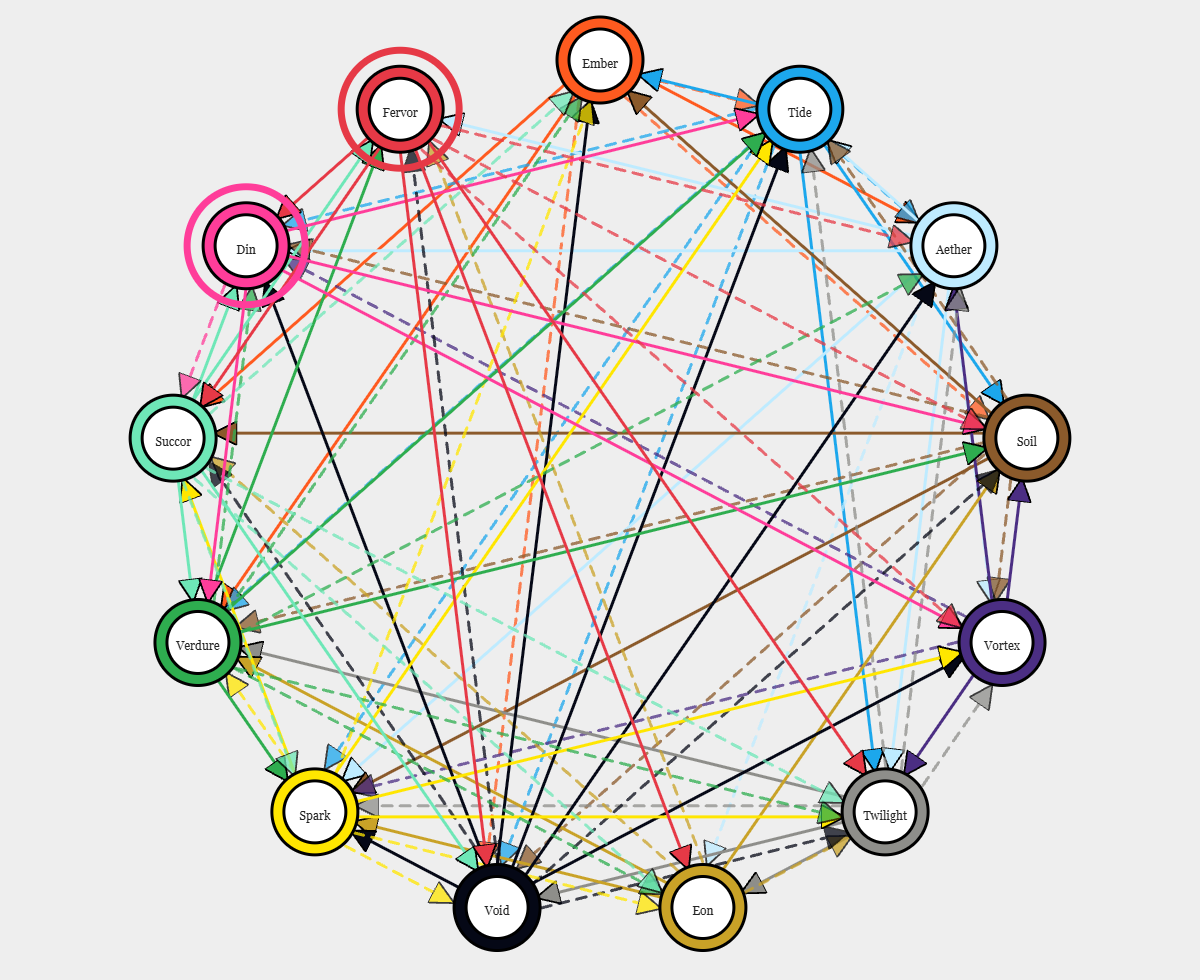
Shiki Powers
As I have explained before, "Magic" is simply the laws of nature, which can be tampered with if one finds the correct "wavelength", like a radio wave connecting to a radio. These "powers" are called Shiki, and while anyone can wield Shiki, only very few have mastered a specific Shiki in such a way that it can truly be considered a power. "Everyone can light a candle, but not just anyone can light a hundred at once". While technically anyone could use multiple types of Shiki, mastering even one takes a long time. Shiki also has a spiritual connection with one’s self, making it easier for a user to learn a specific type that suits them, while another type may be more difficult.
Usage
To use Shiki powers, one must wield a gauntlet or similar device that allows the user to tap into these different wavelengths, similar to how one cannot hear radio waves with their bare ears.
Aside from the gauntlet, they also need a special mineral that is connected to the Shiki element.
Skynotes
1. Shaoul Varon can render Shiki powers useless and have a unique kind of power of their own, which cannot be accessed. Shiki powers can also be compared to the "gifts" Titanborns receive at birth.
Below follows a list displaying each Shiki power, its "elemental" mineral, and the abilities that can be mastered within that specific Shiki.
SkyNote: While multiple "power abilities" are displayed, keep in mind that one generally has more control over one ability than another, creating even a wide range of users across each Shiki power on their own.
Ember Shiki
Schorivite Crystal
fire creation, fire control, fire explosions, lava/magma, temperature control, self-ignition, heat immunity, rocket jumps, etc.
Tide Shiki
Bysseral
water creation, water control, liquid control, water absorption, water walking, underwater breathing, fast swimming, freezing, unfreezing, etc.
Aether Shiki
Clofogan Shard
air control, gas control, gas transformation, wind gusts, projectile redirection, pressure domes, gliding, boost jumps, vacuums, etc.
Soil Shiki
Inmadium
ground control, solid transformation, impact absorption, mud, quicksand, earthquakes, etc.
self-time slowing, localized time slowing, past viewing, future viewing, afterimages, projectile timing, localized time stops, etc.
Void Shiki
Fracture Remnant
spatial fractures, space folding, short-range blinking, movement sensing, pocket dimensions, reality-mind manipulation, etc.
Spark Shiki
Condoniun
lightning creation, lightning summoning, electricity control, short-circuiting, EMPs, storm sensing, item recharging, electromagnetic direction sense, etc.
Verdure Shiki
Nemadon Stone
flora control, vine/root control, tree movement, thorn shields, vegetation shifting, instant food growth, etc.
Succor Shiki
Sanitat
wound closing, bleeding control, bone repair, pain reduction, stamina restoration, poison resistance, curse purification, pain restoration, regeneration, etc.
Din Shiki
Ekonian
sound waves, sound amplification, sound muting, sonic screams, vibrations, noise cancelation, voice mimicry, distant hearing, vibration detection, etc.
Fervor Shiki
Halmasan
emotion sensing, emotion amplification, emotion sharing, emotional energy absorption, emotional projection, guilt crush, emotional addiction, pain blocking, jealousy manipulation, etc.
Type Charts
Fauna Categories
Mountainous: All Estalons that primarily inhabit mountainous terrain.
Subterranean: All Estalons that dwell primarily beneath the surface of the land.
Aerial: All Estalons that spend the majority, if not all, of their time airborne.
Arctic: All Estalons that primarily inhabit arctic and frozen biomes.
Aquatic: All Estalons that spend the majority, if not all, of their time within aquatic environments.
Sylvan: All Estalons primarily found within forests and jungle ecosystems.
Plains: All Estalons commonly found within open grasslands and wide green expanses.
Sunscorch: All Estalons that primarily inhabit hot climates, such as deserts and savannahs.
Magmatic: All Estalons primarily found within Scorchava’s volcanic and lava-dominated lands.
Fungal: All Estalons that exist at the intersection between fauna and fungal lifeforms.
Machina: All Estalons that possess technological components or advancements, whether Eldrane-made or biologically integrated.
Mythical: All Estalons distinguished by legendary status or rare, extraordinary traits.
Fauna Classes
Wildlife: All Estalons that live freely in the wild and are not commonly domesticated or used by Eldranes.
Pet: All Estalons that are commonly kept as companions, household creatures, or bonded animals.
Subrider: All Estalons that are mainly meant to be ridden or used for travel.
Spiritual: All Estalons with a spiritual nature, realm connection, or classification as Ajimon Ravuf.
Flora Categories
Plant: All Sylvanites classified as general plant life, including smaller rooted or leafy growths.
Tree: All Sylvanites that grow with a large trunk, branches, and a long-lasting wooden structure.
Fungi: All Sylvanites classified as fungal lifeforms, including mushrooms and similar growths.
Moss: All Sylvanites that grow as soft, low, spreading vegetation across surfaces.
Vine: All Sylvanites that grow by climbing, wrapping, or spreading across other surfaces.
Flower: All Sylvanites known for producing blossoms, petals, or flower-like growths.
Fruit: All Sylvanites known for producing fruits, seeds, or edible growths.
Artifact Categories
Item: General objects that can be carried, used, or stored by Eldranes.
Object: Larger or less portable creations, often made for a specific purpose or function.
Artifact: Rare or significant objects with notable history, power, or cultural importance.
Material: Resources, substances, or crafted components used to create other objects.
Weapon: Objects created or used for combat, defense, or hunting.
Relic: Ancient or sacred objects preserved for their historical, spiritual, or legendary value.
Artifact Subtypes
Potion: Liquid-based artifacts or items created for drinking, applying, or magical effects.
Charm: Small objects carried or worn for protection, luck, blessings, or other effects.
Essence: Concentrated energy, liquid, or substance drawn from a source, creature, place, or phenomenon.
Device: Crafted mechanisms or tools designed to perform a specific function.
Landmark Categories
Monument: Structures built to honor, remember, or represent a person, event, deity, or culture.
Tower: Tall structures, often used for watchpoints, rituals, defense, study, or symbolism.
Temple: Sacred structures used for worship, rituals, offerings, or spiritual gatherings.
Ruins: Remnants of old structures, settlements, or civilizations that have partly fallen apart.
Portal: Gateways or passage points that connect locations, realms, or other unusual destinations.
Structure: General built landmarks that do not fall under a more specific category.
Phenomena Categories
Natural: Phenomena that occur through the natural laws and forces of the world.
Artificial: Phenomena created or caused by Eldranes, devices, rituals, experiments, or other intentional actions.
Spontaneous: Phenomena that appear suddenly or unpredictably without a clear direct cause.
Engineered: Phenomena deliberately designed, shaped, or controlled for a specific purpose.
Phenomena Types
Stable: Phenomena that remain consistent, controlled, or predictable over time.
Unstable: Phenomena that shift, break down, fluctuate, or behave unpredictably.
Phenomena Effect Classes
Spatial: Phenomena that affect space, distance, location, portals, dimensions, or physical placement.
Temporal: Phenomena that affect time, age, memory of events, timelines, or temporal flow.
Energetic: Phenomena that affect energy, force, Shiki, light, heat, or other power-based systems.
Corruptive: Phenomena that damage, twist, infect, or alter life, land, objects, or natural balance.
Mineral Types
Crystal: Minerals that form in clear, structured, or crystalline shapes.
Ore: Minerals that can be mined and refined into metals, materials, or useful resources.
Alloy: Minerals or materials created by combining multiple metals or substances.
Mineral Tiers
Fragile: 1-star minerals that are brittle, weak, or easily damaged.
Stable: 2-star minerals that are reliable, common, and structurally balanced.
Dense: 3-star minerals that are stronger, heavier, and more durable than stable minerals.
Ismal: 4-star minerals that are rare, powerful, or unusually refined.
Astral: 5-star minerals that are legendary, otherworldly, or among the highest known mineral tiers.
Registry
How each specific Codex type is structured, and what information is included in each type of Codex entry.
Races
Races have the Codex Symbol of R-, symbolizing Race.
Each codex entry includes the following information: Codex Number, Codex Name, Scientific Name, Origin, and Temperament.
Example:
Codex Number: R-0001
Codex Name: Human
Scientific Name: Homo Sapiens
Origin: Earth
Temperament: Neutral
Fauna
Fauna has the Codex Symbol of C-, symbolizing Creatures.
Each codex entry includes the following information: Codex Number, Codex Name, Scientific Name, Category, Region, Class, and Model.
Example:
Codex Number: C-0001
Codex Name: Diukol
Scientific Name: Herbolacerta Viatorum (will maybe be replaced)
Category: Plains
Region: X
Class: Sub-Rider
Model: Dinosaur (will be replaced)
Flora
Flora has the Codex Symbol of S-, symbolizing Sylvanites.
Each codex entry includes the following information: Codex Number, Codex Name, Scientific Name, Category, and Region.
Example:
Codex Number: S-0001
Codex Name: Spiral Blossom
Scientific Name: Quercus Spirrulanta
Category: Tree
Region: Lumicryst Caves
Minerals
Minerals have the Codex Symbol of M-, symbolizing Minerals.
Each codex entry includes the following information: Codex Number, Codex Name, Chemical Name, Type, Tier, and Location.
Example:
Codex Number: M-0001
Codex Name: Esmerow
Chemical Name: ??? (yet to be added)
Type: ??? (yet to be added)
Tier: Dense
Location: ??? (yet to be added)
Artifacts
Artifacts have the Codex Symbol of A-, symbolizing Artifacts.
Each codex entry includes the following information: Codex Number, Codex Name, Category, Subtype, Origin, and Material.
Example:
Codex Number: A-0001
Codex Name: Hermodox
Category: Substance
Subtype: Potion
Origin: Wynovipera Cornuta
Material: Water-based
Phenomena
Phenomena has the Codex Symbol of P-, symbolizing Phenomena.
Each codex entry includes the following information: Codex Number, Codex Name, Type, Category, and Effect Class.
Example:
Codex Number: P-0001
Codex Name: Fracture
Type: Unstable
Category: Natural
Effect Class: Spatial
Landmarks
Landmarks have the Codex Symbol of L-, symbolizing Landmarks.
Each codex entry includes the following information: Codex Number, Codex Name, Type, and Location.
Example:
Codex Number: L-0001
Codex Name: Fracture Room Soronic
Type: Portal
Location: Soronic Mountains
Regions
Regions have the Codex Symbols of W- and Z-, symbolizing World Zones.
Each codex entry includes the following information: Codex Number, Codex Name, and Average Climate.
Example:
Codex Number: Z-0000-0001
Codex Name: Kryntyl Sea
Average Climate: -2↔4°C
Religions
Religions have no Codex Symbol and instead use an ID.
Each codex entry includes the following information: ID, Title, and Origin.
Example:
ID: 1
Title: Jimbortan
Origin: Dynasty of Murok Nad’Il
Stories
Stories have no Codex Symbol and instead use an ID.
Each codex entry includes the following information: ID, Title, and Theme.
Example:
ID: 1
Title: Project Aethertech Sentinel
Theme: Edlrane Project
All Astracel Text Field Markings Showcase
All markings are used with brackets containing the text field item, followed by parentheses containing the marking type or markings listed below.
To separate multiple markings, we use %12, since links can include simple symbols such as +, -, %20, &, etc..
How it looks inside of the file: [Hello World!](bold%12italic%12ghost).
How it looks for users: Hello World!.
To separate hex codes for multiple colors and directions within a color box, we use %13.
How it looks inside of the file: [Hex](bold%12hex=FF006E%13FFE86E%132C746E%13ne%12tcol=FF006E).
How it looks for users: Hex.
How it looks in the code: <span class="hex-tag" data-hex="#ff006e,#ffe86e,#2c746e" title="to bottom left • #FF006E → #FFE86E → #2C746E"><span class="hex-swatch" style="display:inline-block;width:1.1em;height:1.1em;vertical-align:-2px;margin:0 6px 0 0;border-radius:3px;border:1px solid rgba(255,255,255,0.35);background:linear-gradient(to bottom left, #ff006e, #ffe86e, #2c746e);"></span><span class="tcol-text" style="color:#ff006e;"><strong>Hex</strong></span></span>.
19: Tcol
Used to convert the text inside the brackets into a specified color value. Certain terms automatically receive a predefined color, even without a specifier. Example: "Astracel".
Notes: Used when talking about specific items, such as the Hex example above.
18: Glyph
Used to convert the text inside the brackets into glyphs of the Reynixian tongue. Example: "Astracel" → .
18.1: Glyph-p: Converts the text inside the brackets into glyphs with a paper/scroll background.
18.2: Glyph-s: Converts the text inside the brackets into glyphs with a stone/rune background.
Notes: Used when talking about the old world or language.
17: Metric
Used to give a text field item a white underline. Once hovered over, it will show a tooltip roughly converting metric units to imperial units.
Notes: Used for those on the other side of the world, since I’m Dutch and use the metric system.
16: Tag
Used to add a tag icon to a text field. Clicking the tag opens a search for the subject referenced by the text, using a letter-coded category to determine what type of entity it is. Examples: Neutral, Fox, Plant.
Rtag: For Eldranes/Races.
Ctag: For Fauna/Estalons/Creatures.
Stag: For Flora/Sylvanites.
Atag: For Artifacts.
Ltag: For Landmarks.
Ptag: For Phenomena.
Mtag: For Minerals.
Ztag or Wtag: For Regions/World Zones.
Notes: Used to easily search for text items inside their respective categories.
15: Tooltip
Used to give a text field item a white underline. Once hovered over, it will display a tooltip.
Notes: Used when talking about specific items that may need extra detail. While not included as markings, this will also automatically work for the words Estalons, Eldranes, and Sylvanites.
14: Scrambled
Used to scramble the text inside a text field. Example: btlrTatixeshmewl ic blesd.
Notes: Used when talking about broken-down devices or ancient items.
13: Spoiler
Used to add a spoiler over the text. Once clicked, it will disappear.
Notes: Used when talking about future content or "leaks".
12: HR
Used to add a separator above the text marking.
Notes: Used while making this showcase :).
11: Version
Used where hovering over a Golden Version Marking will show the current version number in a tooltip.
Notes: Used when talking about the current version.
Notes: Used to easily link towards other pages when referenced inside texts that do not have a codexNumber or ID.
09: Golden
Used where a text field item will be colored in a golden gradient.
Notes: Usually used together with the bold marking for special text field items, or together with the Version marking.
08: Anchor
Used to set a prime anchor on a page, which can be linked to from another page.
08.1: Scroll: A clickable text field that sends the user towards an Anchor. Example: Kyrgozan Goddess; Skylaros
Notes: Used together with the Codex Marking or Religion=/Story= Markings.
07: Hex
Used where a color field will be added next to a text field item.
-;: Linear Gradients.
;: Radial Gradient.
Notes: When hovering over the color field, the hex codes, special color mark, and direction will appear in a tooltip if multiple colors are used.
06: Ghost
Used where a text field item will turn slightly gray.
Notes: Usually used together with the italic marking for notes like these.
05: Audio
Used where a text field item will gain the volume high icon. When clicked, an audio file will play.
05.1: Audio-s: Used where a text field item will not gain the volume high icon. When clicked, an audio file will still play.
Notes: Depending on how the Audio marking is used, it can either search for the file name mentioned within the parentheses, or search for another name by placing "=" after the audio tag and then mentioning a name. In the marking above, I put the following between parentheses: audio{-s}=TGPT.
While there is no current list of the prisoners inside the Black Manta Prison, some character I thought would be funny to include were: Dr. Aloysius James Animo and Zaheer
(Astracel) Quotes I Created and Love
"Those who embody endurance, loyalty that does not betray, and the strength to protect may stand beside the Guardians of our World and are welcomed within our homeland." - Sky JalvingShortened: "Those who embody endurance, and have the strength to protect others, may stand beside our guardians and are welcomed in our homeland." - Sky Jalving
"Eventually, even the greatest heroes shall fall, but that does not mean they cannot rise again." - Sky Jalving {Created as an extension on the quote: "You either die a hero or live long enough to see yourself become the villain"}.
"Facts are the undeniable truths of our world, upheld as the absolute. Yet, with the passage of time, even those truths may falter or change. Thus, the question arises: if facts can no longer uphold our belief of the world, what can?" - Sky Jalving {Inspired by the quote: "Facts are facts, until proven wrong"}.
"In the spectrum of self-expression, each person unique, each beautiful, blooming in the light of their own truth." - Sky Jalving
"May death welcome me like the shadow that never leaves my sight. But today it is not me, but you who has been grasped by its rotten claws, only to be dragged into the abyss." - Sky Jalving
"When Heaven and Earth are controlled by the will of man kind, Hell will be the safest place to reside." - Sky Jalving
"In the everlasting mourning of the dead, it is only the living whose actions can affect us in the present." - Sky Jalving
"Quotes can be the most random stuff that someone voices, it needn't has to has a hidden meaning, nor strive to be inspiring. Just a quote from within itself, carries a power of emotion. Not defined by the quote itself, but by the one who listens to it." - Sky Jalving
Random Quotes I like
"Carry out a random act of kindness, with no expectation of reward, safe in the the knowledge that one day someone might do the same for you." - Princess Diana
"Cyan, the color of tranquility and clarity, whispers secrets of serenity in every shade, painting the world with calm allure." - ?
"Without big data analytics, companies are blind and deaf, wandering out onto the web like deer on a freeway." - Geoffrey Moore
"Life is about change, sometimes it's painful, sometimes it's beautiful, but most of the time it's both." - Kristin Kreuk
"Honesty is often very hard. The truth is often painful. But the freedom it can bring is worth the trying." - Fred Rogers
"Knowledge is power. Information is liberating. Education is the premise of progress, in every society, in every family." - Kofi Annan
"The one thing he hates more then a cheater, is a cheater on the loose." - Tommy Schoenith {TikTok}
"The goal is to turn data into information, and information into insight." - Carly Fiorina
"God made the world, but the Dutch made Holland." - David Winner
Ben 10 Quotes I like
You can click these quotes for audio.
"Being a hero isn't about others knowing you did something good, it's about you knowing you did something good. Being a hero is its own reward." - Maxwell Tennyson
"I'm not evil, I'm nuanced." - Kevin Ethan Levin
"Why bother with a cell? This human body is prison enough... But someday I'll be free. Then, they will all suffer, starting with Ben Tennyson. Until that day... BRING ME CHILI FRIES!" - Albedo
"Evil? No... Visionary! I feel power building inside me. I see the world that only I can create. It was Azmuth who thought me flawed. He gave me the name "Malware". But I am not the flawed one, it is all the rest that are inferior. They bend and stretch, mimic and manipulate only what others have created. I do not upgrade others' creations. They upgrade me!" - Malware
"I have great excitement for what lies ahead." - Rook Shar
"THAT IS NOT OUR WAY! Tell them how we feel about those who destroy our ways, who devise machines, who disturb the heavens." - Kundo
"Hunh... First rule of showmanship, razzle-dazzle 'em." - Bezel
"Blah! Real magic! I hate real magic! Want to turn a pumpkin into a carriage? Poof! Broke your mother's vase? Zap! Good as new! There are no rules. It's all just willy-nilly." - Bezel
"I wish I could say I will remember you all fondly, but when I'm finished, there will be no you to remember!" - Maltruant
Game Quotes I like
"The strength to stand, is the strength to make a stand. To serve a purpose greater than yourself. That is the lesson you must learn." - Rost {Horizon Zero Dawn}
"Being smart will count for nothing if you don't make the world better. You have to use your smarts to count for something, to serve life, not death." - Elisabeth Sobek's Mother {Horizon Zero Dawn}
"In the beginning there was darkness. Until someone set themselves aflame. Only then did the universe know light." - Yohualtecuhtin {Genshin Impact}
Current state of the Astracel Map
Map pages are slowly being added with each update.
Feedback
If you have any feedback on the currentversion of the site, please fill out this form:
If you have any questions about Astracel in general, visit our Q&A page:
Questions and Asnwers. {Questions will be answered every update or so, with the changelog displaying their qaCode}.
Kyrgozan • Malavotins (Malvata)
Kyrgozan
The Kyrgozan Faith was recorded as a religious doctrine created by the Malavotins, a clan said to possess the rare ability to gaze into both the distant future and the ancient past. Because of this extraordinary gift, many believed, and some still do, that both the Reynixian tongue and the Kyrgozan Faith itself were constructed upon truths known only to them about the nature of the world.
Within this belief system, it is taught that the world was, and continues to be, shaped by countless beings from different realities. The Gods, however, remain unseen, acting not as walking divinities but as hidden forces who guide the Eldranes and Estalons throughout the course of existence.
Fortune favored modern scholars in one crucial matter: it appears the entirety of the ancient world once shared a common language. With the aid of the Shaoul Varon, who still preserve and speak the Reynixian tongue, fragmented records were translated into terms understandable in the modern age, allowing the Kyrgozan teachings to be studied once more.
The Sapin Gorot Vatility
While not counted among the Gods themselves, the Sapin Gorot Vatility are regarded by the Malavotins as the most immense and powerful beings in existence. They are described as vast entities drifting through the endless void of dead space; wandering in solitude until they encounter another of their kind. When such a meeting occurs, they unite in a manner beyond mortal comprehension.
Their forms are said to consist of spiraling star-clusters, each containing uncountable suns and worlds. Through their convergence, new galaxies are seeded across the void. For this reason, they are revered as THE Celestial Beings; entities who did not merely create our world, but who shaped Space, Time, and even the Gods themselves. To speak of them is to speak of infinity: beings too vast for even the divine to rival, yet whose existence makes all creation possible.
Solastra
The Radient Bearer of Flame
Solastra is revered as the Goddess of Fire and Light. It is said that when time first began and the Primordial Gods came into being, she was gifted one of the Primordian Elements; drawn directly from the Sapin Gorot Vatility themselves. With this essence, she ignited the first light in existence, ushering in the dawn of creation.
In the Divine Visage, she is envisioned as a living flame, a radiance so brilliant it cannot be extinguished. When she manifests her power, she appears as an undying star; visible even beneath the glare of daylight. Some texts claim she now lies dormant within the heavens, while certain Ignaran traditions insist she slumbers deep within the earth, forming the very heart of volcanoes. Beneath rivers of molten magma, her eternal flame is said to burn still.
Termakon
The Steadfast Landshaper
Termakon is honored as the God of Earth and Nature. Like Solastra, he was gifted one of the Primordian Elements at the birth of time; drawn from the Sapin Gorot Vatility. With this power, he shaped the world itself, pulling land from the abyssal sea of stars. As the surface rose above the cursed void, life began to flourish.
In the Divine Visage, he is envisioned as the ancient progenitor of the Ashen-Maulers; a race believed by some scholars to one day go from Estalon into the Eldrane class within the next two to five centuries. When Termakon exerts his power, the world trembles as though caught in an unending quake. Though most surviving texts claim he has since ascended into the heavens, it is widely believed that he continues to watch over his beloved descendants.
{Skynote: The word "Earth" automatically generates a tooltip for the Human home world. Here, it simply refers to soil/ground, not the planet Earth}.
Ani
The Windswept Commander
Ani is known as the God of Storms and Flight. Like the other Primordial Ones, he was gifted one of the Primordian Elements at the birth of time, drawn directly from the Sapin Gorot Vatility. With this power, he reshaped the skies into a realm capable of sustaining life, allowing countless aerial species to thrive; including those said to have journeyed from distant worlds beyond Astracel.
In the Divine Visage, he is envisioned as a raging storm so dense and dark that none may see through him. Other texts describe a more humanoid form than that of the other Primordials, though no two accounts fully agree. All surviving records, however, speak of a mighty Aerial Estalon that served as his eternal companion. Certain ancient murals depict this being in a form resembling what scholars believe to be an ancestral Skyglider.
Tyndt
The Tidemaker
Tyndt is known as the God of Water and Temperature. Like the other Primordial Ones, he was gifted one of the Primordian Elements at the birth of time, drawn directly from the Sapin Gorot Vatility. With this power, he flooded Astracel with vast oceans, winding rivers, and endless lakes. Upon the lands that rose above the waters, he bestowed the balance of climate, shaping realms of warmth, frost, and every shifting breath between.
In the Divine Visage, only ancient mural depictions remain. These portray a mythical beast known in modern times as the Wostolan. Whether this being was Tyndt himself, a symbol of his dominion, or a companion akin to Ani’s Aerial Estalon remains unknown.
Varon Sintruk
Enigmetica
Varon Sintruk is honored as the God of Balance and remembered as the most enigmatic of the Primordial Gods. Unlike the others, he was gifted two Primordian Elements at the dawn of time, both drawn from the Sapin Gorot Vatility. With these dual powers, he governed under two sacred names: Zisma Varon and Zisma Sintruk; meaning God of Life and God of Death in the Reynixian tongue. Through this duality, he became known as both creator and destroyer.
In the Divine Visage, no recorded depiction of him exists. Yet it is said he still watches from beyond the heavens, observing every Eldrane, Estalon, and Sylvanite, whether of this world or the next. Every bloom falls under his guidance, and every death is regarded as a necessary step in preserving Astracel's balance, calculated along what is believed to be the most fitting path for the world.
Skylaros
The Judge of Life
Skylaros is revered as the Goddess of the Afterlife. When a soul departs; whether Eldrane, Estalon, or Sylvanite, one of her emissaries, the spiritual beings known as the Noctis Fae, descends to claim it and guide it into her hidden realm. Within that realm, Skylaros offers each soul a choice: to submit to judgment or to wander Astracel eternally as a spirit.
Those who accept judgment witness the unveiling of their existence, where every memory of their life is laid bare before her. It is then that Skylaros delivers her verdict: the soul may ascend to Da’kul, the radiant heavenly city, or be cast into Ma’ru, the dark kingdom beneath the Sea of Death.
In the Divine Visage, she is described as the embodiment of holiness; a radiant ring filled with countless eyes, scanning creation to ensure no memory is hidden or concealed after death. As innumerable beings perish with each passing moment, it is said she can divide herself infinitely, judging every soul independently and without delay.
Stygarius
Sovereign of Ma’ru
Stygarius is revered as the Goddess of the Sea of Death and the ruler of Ma’ru. She entrusted the ancient Ocean Guardian with protecting the entrance to her abyssal domain. In return, should any soul attempt escape, the Guardian is permitted to devour it; casting it back into Ma’ru in an endless descent.
In the Divine Visage, she is described as another embodiment of holiness: a radiant ring filled with countless eyes, watching for the unrest of the damned. Yet above this ring rests a luminous halo, crafted to deceive wandering souls into believing they have reached Da’kul. Though fragmented texts suggest her true form is monstrous beyond comprehension, no surviving record offers a complete description.
Sadust
Sovereign of Da’kul
Sadust is known as the God of the so-called Heavenly City, Da’kul. While many faiths describe heaven as a place of tangible splendor, Da’kul is said to be something far stranger, and far more unsettling to the living. For Da’kul is not a physical realm, but a mental one: a paradise shaped from the countless dreams of its inhabitants. Each soul experiences its own perfect reality.
To the living mortal, however, Da’kul appears as an endless void, silent, empty, and filled with drifting, lifeless bodies suspended in stillness. Many who glimpse it believe they have instead stepped into Ma’ru.
In the Divine Visage, Sadust is described as yet another embodiment of holiness: a radiant ring lined with innumerable eyes. Unlike Stygarius, however, he bears vast dark angelic wings; mirroring the infinite void that defines his realm.