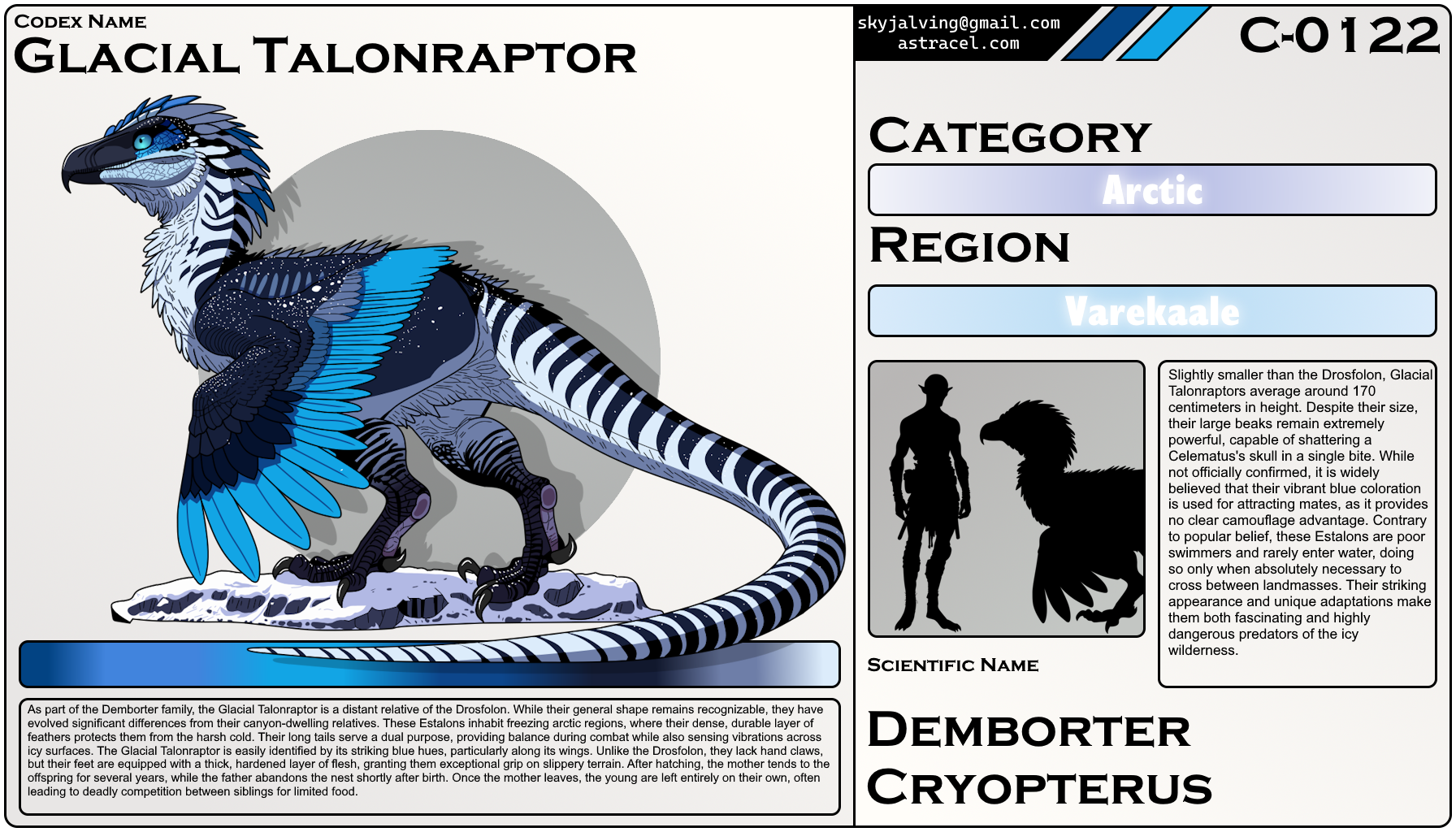
As part of the
Demborter family, the Glacial Talonraptor is a distant relative of the
Drosfolon. While their general shape remains recognizable, they have evolved significant differences from their canyon-dwelling relatives. These
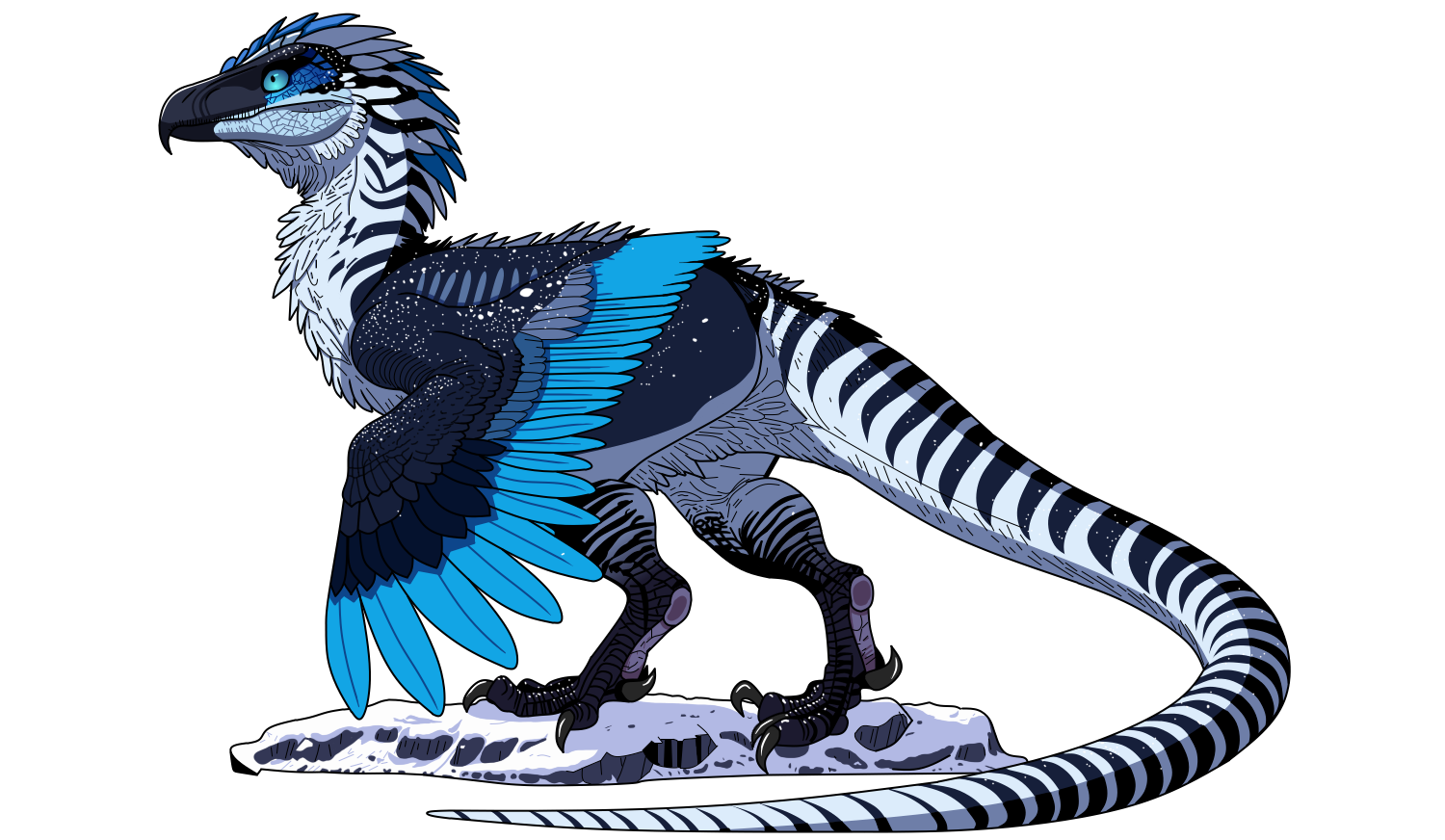
Estalons inhabit freezing arctic regions, where their dense, durable layer of feathers protects them from the harsh cold. Their long tails serve a dual purpose, providing balance during combat while also sensing vibrations across icy surfaces. The Glacial Talonraptor is easily identified by its striking blue hues, particularly along its wings. Unlike the
Drosfolon, they lack hand claws, but their feet are equipped with a thick, hardened layer of flesh, granting them exceptional grip on slippery terrain. After hatching, the mother tends to the offspring for several years, while the father abandons the nest shortly after birth. Once the mother leaves, the young are left entirely on their own, often leading to deadly competition between siblings for limited food.