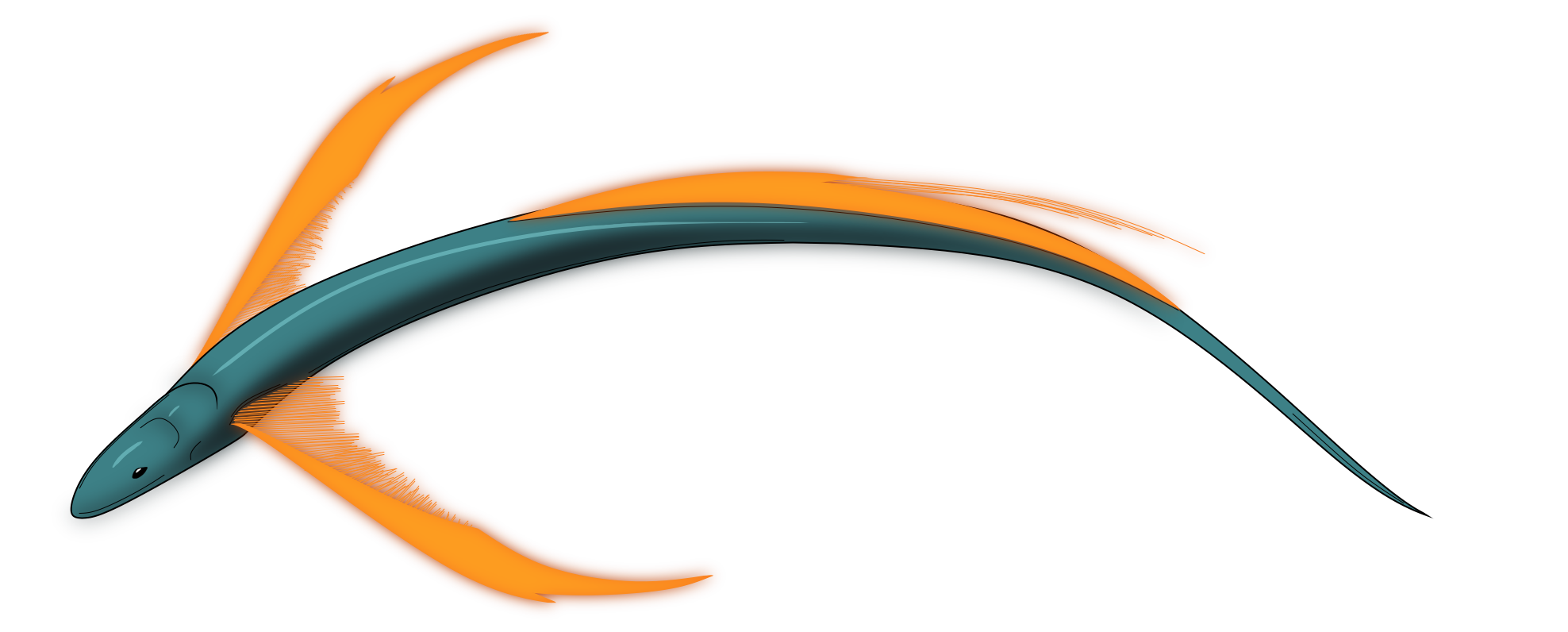
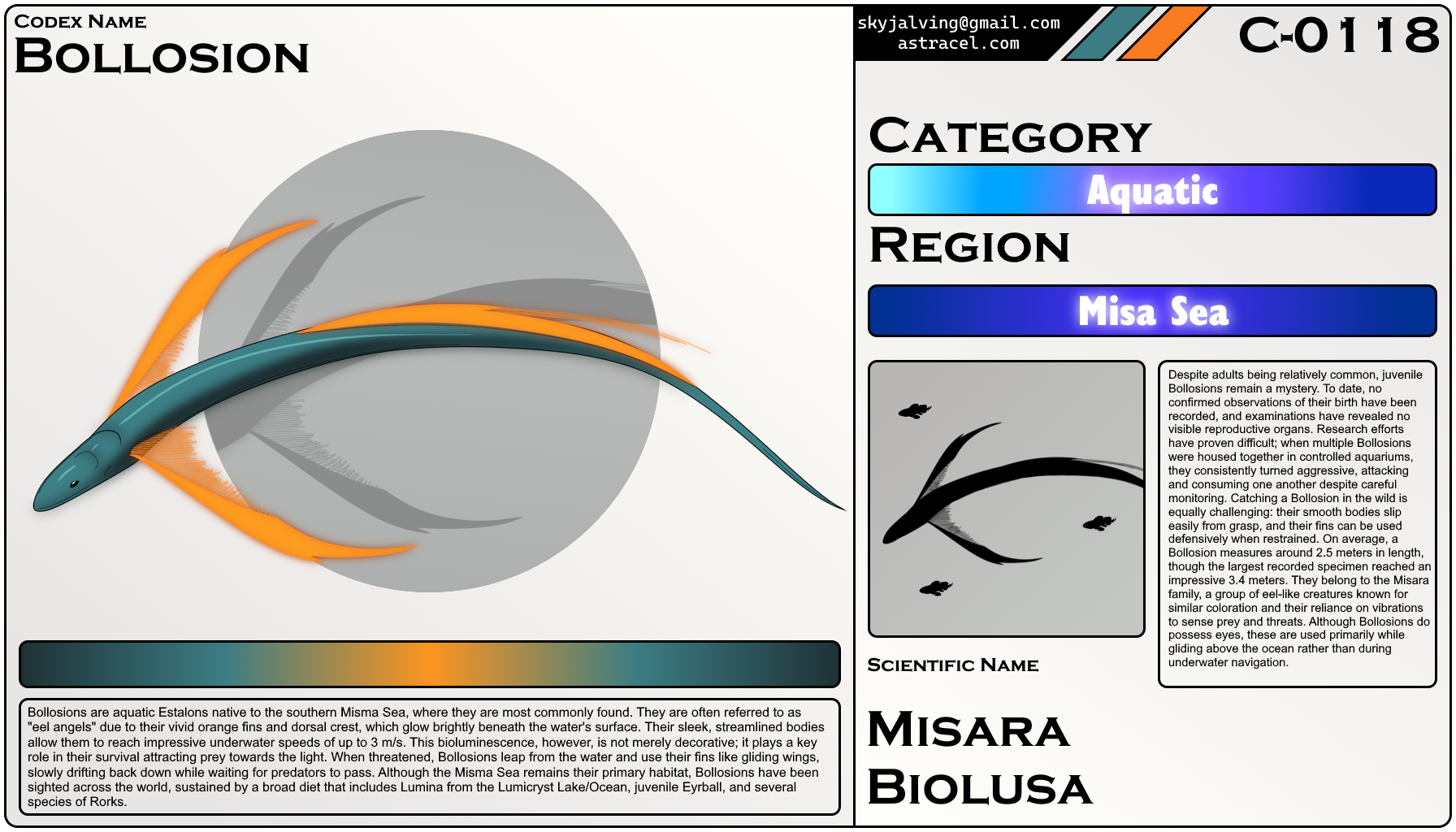
Bollosions are aquatic
Estalons native to the southern
Misma Sea, where they are most commonly found. They are Bollosions are often referred to as "
eel angels" due to their vivid orange fins and dorsal crest, which glow brightly beneath the water’s surface. Their sleek, streamlined bodies allow them to reach impressive underwater speeds of up to
3 m/s. This bioluminescence is not merely decorative, but plays a crucial role in their survival by attracting prey toward the light. When threatened, Bollosions leap from the water and use their fins like gliding wings, slowly drifting back down while waiting for predators to pass. Although the
Misma Sea remains their primary habitat, Bollosions have been sighted across the world, sustained by a broad diet that includes
Lumina from
Lumicryst Lake, juvenile
Eyrball, and several species of
Rorks.
Despite adults being relatively common, juvenile Bollosions remain a mystery. To date, no confirmed observations of their birth have been recorded, and examinations have revealed no visible reproductive organs. Research efforts have proven difficult; when multiple Bollosions were housed together in controlled aquariums, they consistently turned aggressive, attacking and consuming one another despite careful monitoring. Catching a Bollosion in the wild is equally challenging, as their smooth bodies slip easily from grasp, and their fins can be used defensively when restrained. On average, a Bollosion measures around
2.5 meters in length, though the largest recorded specimen reached
3.4 meters. They belong to the
Misara family, a group of eel-like creatures known for similar coloration and their reliance on vibrations to sense prey and threats. Although Bollosions do possess eyes, these are used primarily while gliding above the ocean rather than during underwater navigation.